Fundo preparador para madeira: qual o certo e quando usar
27/04/2026
Why the right wood primer prevents stains, peeling, and wasted paint
For new wood, repainting, MDF, plywood, or a door, always use a wood-specific preparatory primer; a wall primer is incompatible with wood because it does not penetrate the fibers, does not block tannin or resin, and can leave yellowish stains even under white topcoats. According to ABNT NBR 11702:2021 and official manufacturer technical bulletins, the correct product must promote penetration, cohesion, and mechanical adhesion on a porous substrate.
- Wood-specific primer penetrates the fibers and consolidates loose areas.
- Wall primer on wood is technically incompatible.
- New wood usually needs 1 to 2 coats.
- MDF requires 1 coat with good penetration.
- Doors require mandatory sanding with 120-grit before application.
- Drying time is typically 2 to 4 hours.
The mechanism is simple: absorption into the substrate improves cohesion, while blocking tannin and resin migration protects the finish. In Brazil, where coastal humidity and regional climate variation are common, this technical choice matters even more.
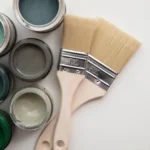

The mechanism hidden behind a clean finish on Brazilian wood
Wood-specific primer works because it penetrates capillary pores, reduces friability on the surface, and creates a more stable base for the finishing coat. In practice, this means better adhesion on pine, eucalyptus, cedar, ipê, MDF, and plywood, especially in DIY renovations without professional spray equipment.
When the primer is base aquosa and formulated for wood, it helps control stain bleed and resin migration without forming a weak pelicular film. Wall primer, by contrast, is designed for masonry and does not correct the absorption profile of wood.
How to apply it without creating a weak layer
- Inspect the substrate and confirm whether it is new wood, repainted wood, MDF, plywood, or a door. The surface must be dry and free of grease, dust, and loose particles.
- Sand doors and flat parts with 120-grit before priming. This improves aderência mecânica and removes gloss or old contaminated layers.
- Apply the correct wood primer in 1 to 2 coats on new wood, or 1 well-penetrated coat on MDF. Respect the 2 to 4 hour drying window before recoating.
- Check for stain bleed after drying, especially on resinous species. If the substrate remains absorbent, apply another coat only if the technical bulletin allows it.
Warning: wall primer does not solve tannin bleed, resin migration, or weak coesion in wood. If the board is already peeling or rotten, primer will not repair structural failure.
The most practical choice for new wood, MDF, and doors
| Condition | Technical requirement |
|---|---|
| New wood | 1 to 2 coats of wood primer |
| MDF | 1 coat with good penetration |
| Door | 120-grit sanding before application |
| Drying | 2 to 4 hours |
| Standard | ABNT NBR 11702:2021 |
In Brazilian renovation reality, this comparison avoids the classic mistake of using a masonry product because it is cheaper or easier to find. The technically correct choice is the wood-specific primer, because it penetrates the fibers and blocks tannin and resin better than a wall primer ever can.
What to do before buying in a hardware store
Antes de escolher o fundo, identifique a espécie de madeira: pinus e eucalipto têm muito tanino e precisam de fundo com bloqueador específico; madeiras nobres como cedro e ipê têm menos tanino mas também precisam de fundo específico para madeira.
1. For MDF and compensado, prioritize penetration over film thickness. A good primer must wet the surface evenly and not create a brittle skin.
2. For repintura, remove chalky or friable layers before priming. If the old coating is unstable, no primer can restore cohesion on its own.
3. For doors in humid regions, keep the drying time between 2 and 4 hours and verify the technical bulletin. This prevents premature topcoating and trapped moisture.
Use a wood-specific preparatory primer today, not a masonry primer, and verify the can’s bulletin before opening it.
The common mistake that costs more repainting later
Aplicar fundo de parede em madeira por ser mais barato e acessível — o fundo de alvenaria cria película superficial que não penetra nas fibras e não bloqueia a migração de resina, que depois mancha a tinta de acabamento.
O erro: usar masonry primer on wood, especially on new boards, MDF, or doors. This often happens in DIY projects when the buyer assumes all primers work the same.
Por que acontece: the chemistry is different: masonry primers are made for mineral substrates with different porosity and surface energy. Wood needs penetration, consolidation, and tannin control.
Consequência técnica: the finish may yellow, peel, or need rework after the 2 to 4 hour dry window is ignored or the substrate is not sanded with 120 grit.
Como evitar: choose a wood-specific product, follow ABNT NBR 11702:2021 and the official technical bulletin, and respect the recommended coats for each substrate. If the wood is new, apply 1 to 2 coats; if it is MDF, use 1 well-penetrated coat.
Final verdict for Brazilian renovators who want a lasting finish
The correct answer is clear: for madeira nova, repintura, MDF, compensado, and doors, use a primer specific to wood and not a wall primer. According to ABNT NBR 11702:2021 and official manufacturer technical bulletins, this is the safest way to improve penetration, block tannin and resin, and reduce rework.
This guidance is especially useful for homeowners in coastal humidity, mixed climates, and masonry-dominant Brazilian buildings where repair work is often done without professional equipment. Check availability and pricing on Amazon Brasil before buying, and compare the label with the technical bulletin.
Fonte técnica: Boletins técnicos oficiais dos fabricantes e ABNT NBR 11702:2021.
Norma de referência: NBR 11702:2021.
Artigo atualizado em 2026 — análise baseada em boletins técnicos oficiais e NBR 11702:2021.

Aviso importante: this article summarizes technical data and does not replace official technical bulletins or professional evaluation for specific conditions.
Perguntas Frequentes sobre fundo preparador para madeira
Can I use fundo preparador para madeira on MDF?
Sim, but only if it is a wood-specific product designed for penetration and adhesion on low-absorption surfaces. MDF usually needs 1 well-penetrated coat and proper dust removal before application.
Wall primer is not the right choice because it does not stabilize the fiber structure or control absorption correctly. Always verify the technical bulletin and ABNT NBR 11702:2021.
How many coats does new wood need?
Madeira nova generally needs 1 to 2 coats of wood primer, depending on porosity and the manufacturer’s bulletin. Highly absorbent boards may require the second coat to equalize the substrate.
Do not exceed the recommended build unnecessarily, because excessive film can reduce penetration and harm adhesion.
Does sanding with 120 grit really matter before a door primer?
Yes, 120-grit sanding is mandatory before priming a door because it opens the surface and improves mechanical adhesion. It also removes gloss, old contaminants, and fragile layers.
This step is especially important in humid Brazilian regions where poor prep quickly shows as peeling or stain bleed.
What is the drying time before painting over the primer?
2 to 4 hours is the technical drying window commonly indicated for wood-specific primer. The exact time depends on temperature, humidity, and the product’s official bulletin.
In coastal cities, wait for full drying before topcoating to avoid trapping moisture and reducing durability.
Why does wall primer fail on wood?
Não penetra nas fibras and does not block tannin or resin migration, so it cannot prepare wood correctly. The result is poor cohesion and a higher risk of yellow stains under light colors.
Use a product formulated for wood if the substrate is madeira nova, repintura, MDF, compensado, or a door.
Which product is most trustworthy according to the standard?
The product that follows ABNT NBR 11702:2021 and the official technical bulletin for wood use is the safest choice. That is the basis for selecting the correct primer in Brazilian renovation work.
When in doubt, compare the label claims with the bulletin before buying.
Posts relacionados